Mastering Stability with Smith Machine Training
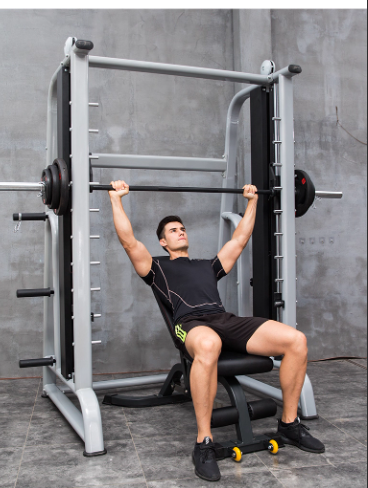
The Smith Machine is often misunderstood in the fitness community, yet it remains one of the most effective tools for hypertrophy and controlled strength development. By providing a fixed path for the barbell, it allows lifters to focus entirely on muscle contraction without the stabilization fatigue associated with free weights.
Benefits of Controlled Weight Training
- Safety and Confidence: The built-in safety catches allow for solo training without the need for a spotter, enabling lifters to push to failure safely.
- Isolation and Form: The vertical or angled path ensures consistent tension, making it ideal for targeting specific muscle groups like the quads, glutes, and shoulders.
- Graceful Progression: Beginners can master the mechanics of complex lifts like the squat and overhead press before transitioning to free-weight variations.

Combat Aerobics and Fighter-Style Workouts
Combining martial arts movements with aerobic conditioning, combat-style training is a premier method for cardiovascular health and stress reduction. These workouts mimic the intensity of a real fight, forcing the body to engage in rapid, explosive movements that torch body fat.
Why Fighter Workouts Dominate Fat Loss
Beyond the physical exertion, the psychological impact of punching and kicking is profound. It allows for the release of pent-up tension while building functional core strength and agility. By alternating between high-intensity strikes and active recovery, practitioners can maximize their post-exercise oxygen consumption (EPOC).

The Turkish Get-Up: A Total-Body Challenge
The Turkish Get-Up (TGU) is a foundational movement that tests stability, mobility, and strength simultaneously. It is not merely a lift; it is a complex sequence of transitions that requires total-body awareness and deep core activation.
Executing the Perfect Get-Up
- Phase 1: The initial press from the floor requires stability in the shoulder girdle.
- Phase 2: The transition to a seated position engages the obliques and deep abdominals.
- Phase 3: The lunge and stand-up phase challenge balance and lower-body coordination.

Kettlebell Training for Power and Strength
Kettlebells offer a unique training stimulus due to their off-center mass. This requires the user to constantly fight against momentum, leading to superior grip strength and explosive power development that traditional dumbbells cannot replicate.
Essential Kettlebell Movements
| Exercise | Primary Benefit |
| Kettlebell Swing | Posterior chain power and fat burning. |
| Goblet Squat | Lower body strength and hip mobility. |
| Turkish Get-Up | Shoulder stability and core integration. |
Frequently Asked Questions (FAQ)
- Q1: Is the Smith Machine effective for building muscle?
- Yes. Because it removes the need for stabilization, you can safely overload the target muscles with more weight and better focus on hypertrophy-driven time under tension.
- Q2: How does combat aerobics help with stress?
- The combination of rhythmic movement and the physical act of striking releases endorphins and allows for the cathartic release of daily stressors, significantly lowering cortisol levels.
- Q3: Why is the Turkish Get-Up considered a full-body exercise?
- It requires constant tension from the feet to the fingertips. It integrates shoulder stability, thoracic mobility, core strength, and hip drive into a single, seamless movement.
- Q4: How often should I incorporate kettlebell training?
- For optimal results, integrate kettlebell sessions 2-3 times per week as part of a balanced program that includes both strength training and cardiovascular recovery.