In today’s rapidly iterating sneaker culture, a pair of football training shoes born in the 1950s, Adidas Samba OG, unexpectedly became the hottest trend item in 2024. From European retro shops to Asian fashion buyers, from street skateboarders to luxury store clerks, this pair of sneakers originally designed for ice and snow venues is writing a new cultural legend.
Functionality turns into fashion
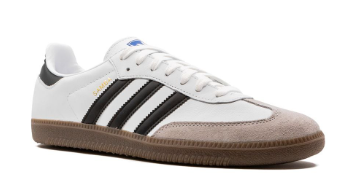
The story of Samba began in post-war Germany. In 1950, Adidas designed a pair of training shoes for football players that could maintain stability on frozen fields. Its iconic rubber wave pattern and thickened tongue are all born for professional sports.
The turning point occurred in Britain in the 1980s. Young people in the football stands found that this pair of affordable sneakers was not only practical, but also rebellious. Manchester’s music scene further fueled the trend, and members of the New Order band wore it on the cover of a magazine, making Samba the first to be linked to fashion.
“We wore Samba because we couldn’t afford other shoes,” the owner of a London retro shop recalled, “Who would have thought that young people would line up to buy them now?”
Differences of the 2024 replica
The OG replica launched by Adidas this year has been fine-tuned while retaining the classic silhouette. The most obvious is the toe material – the original version of the full-grain leather has been changed to a thinner synthetic leather, which solves the pain point that the old version needs a long time to run in.
The sole pattern looks the same, but in fact the deep serrations have been changed to shallow wavy patterns, which are more suitable for modern urban roads. The weight has been reduced by about 10%, and the tongue label has been replaced with a distressed leather version. These changes allow the replica to maintain its retro charm while meeting the contemporary people’s requirements for comfort.
Celebrity effect and outfit
The popularity of Samba is inseparable from the celebrity endorsement. From Beckham’s daily street shots to Bella Hadid’s careful matching, this pair of shoes has been given multiple identities.
In Tokyo, young people pair it with wide-leg overalls and long socks; in Paris, fashion editors like to pair black Samba with beige trench coats; and in Silicon Valley, tech elites find it surprisingly suitable for casual suits. This cross-style adaptability is its charm.
“The key is the elegant proportions of the shoe shape,” said a New York stylist, “It is slimmer than ordinary sneakers, but not as rigid as formal shoes.”
Purchase and avoid pitfalls
Faced with the dazzling array of versions on the market, there are a few things to note:
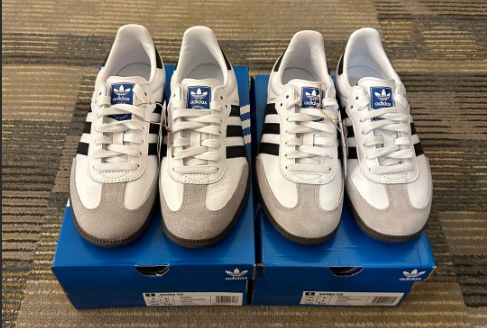
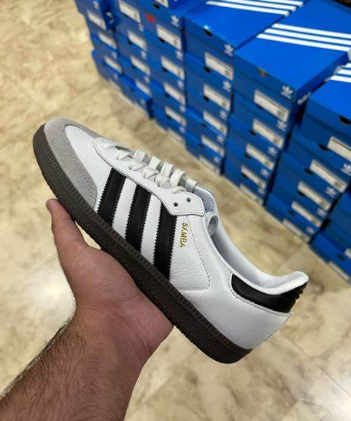
First, look for the “OG” logo on the shoe box, which is a guarantee of a replica. The ordinary version of Samba is bloated and lacks retro charm.
Second, the classic version has a narrow last. People with wide feet are advised to choose a specially launched wide last version, or decide whether to buy a half size up after trying it on.
Finally, be wary of counterfeits. In the adidas logo on the sole of the genuine Samba, the “d” is always a lowercase letter, which is a simple way to identify the authenticity.
The current price range of 90-120 pounds is more approachable than some joint models (such as the 650-pound version in cooperation with Gucci).
Cultural phenomenon
Behind the continued popularity of Samba is the subtle change in contemporary consumer psychology:
1. The premium of authenticity
In the era of over-design, people are eager to return to their roots. Samba’s industrial beauty and practical pedigree just meet this demand.
2. Blurred class
It can coexist harmoniously with luxury brands and does not violate supermarket shopping. This cross-class trait is particularly precious.
3. Representative of sustainable fashion
A pair of classic models that can be worn for many years is itself a denial of fast fashion.
“True classics never need to explain why they are classics.”