The Evolution of Puma Running Footwear: From 80s Retro to Modern Elite
The landscape of athletic footwear has undergone a massive transformation over the past four decades, and few brands illustrate this evolutionary arc quite like Puma. What began as an arms race to provide track athletes with rudimentary shock absorption in the 1980s has blossomed into a multi-tiered ecosystem of highly specialized running shoes. Today, runners and sneaker enthusiasts alike demand different characteristics based on their specific needs, ranging from casual all-day comfort to scientifically engineered propulsion for marathon racing.
To truly understand the modern running shoe market, one must analyze the spectrum of footwear categories. This comprehensive guide breaks down three distinct pillars of the running shoe world through the lens of Puma’s most iconic and performance-driven models. We will explore the nostalgic lifestyle appeal of retro runners, the balanced engineering of modern daily trainers, and the cutting-edge technology embedded in elite carbon-plated racing shoes. By dissecting these categories alongside key competitors from brands like Reebok and New Balance, we uncover the intricate design philosophies that dictate how a shoe feels, performs, and lasts.
Understanding the Three Tiers of Running Footwear
Before diving into specific model comparisons, it is crucial to establish the functional boundaries of modern athletic footwear. The engineering goals for a shoe designed in 1980 are vastly different from one engineered in 2024. The industry generally categorizes these shoes into three distinct tiers, each serving a unique purpose in a consumer’s wardrobe or training rotation.
- Retro Lifestyle Runners: These are heritage models originally designed for the track but repurposed for modern streetwear. They prioritize aesthetic nostalgia, durable upper materials like suede and leather, and basic EVA foam cushioning that provides stable, firm support for walking and casual wear.
- Daily Training Workhorses: The backbone of any active runner’s rotation. These shoes utilize advanced, high-stack foams to absorb the repetitive impact of daily miles. They are engineered to strike a delicate balance between plush comfort, structural stability, and long-lasting outsole durability.
- Elite Super Shoes: The pinnacle of biomechanical engineering. These models are strictly designed for race day, featuring ultra-lightweight mesh uppers, maximum-energy-return PEBA foams, and rigid carbon fiber plates that act as levers to propel the runner forward and maximize running economy.
Retro Showdown: Puma Future Rider vs. Reebok Classic Leather
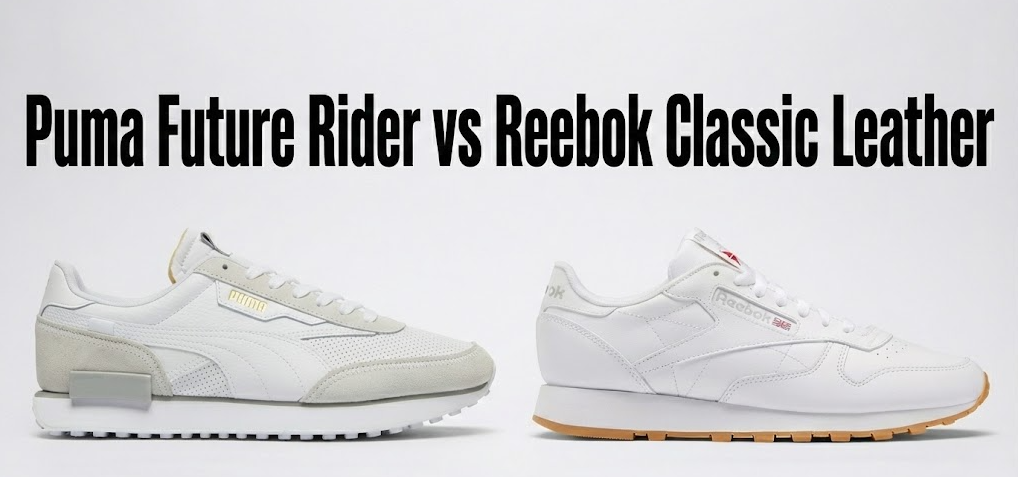
The 1980s marked a golden era for running shoe design, introducing silhouettes that would transcend their athletic origins to become permanent fixtures in global streetwear culture. Two of the most prominent survivors of this era are the Puma Future Rider and the Reebok Classic Leather. While both were initially marketed to runners seeking the latest in shock absorption technology, their modern iterations serve as fascinating case studies in how brands preserve heritage while adapting to contemporary lifestyle demands.
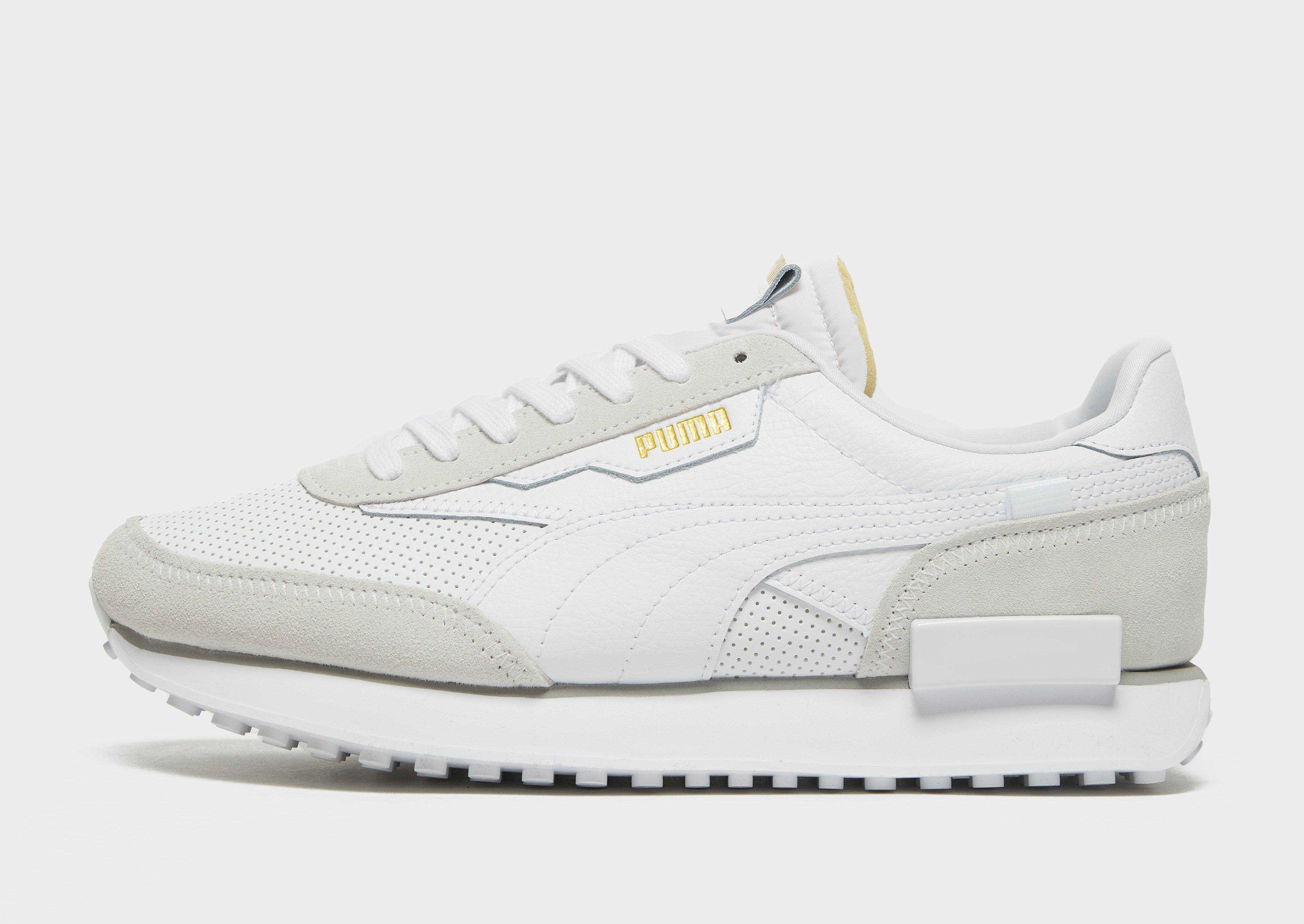
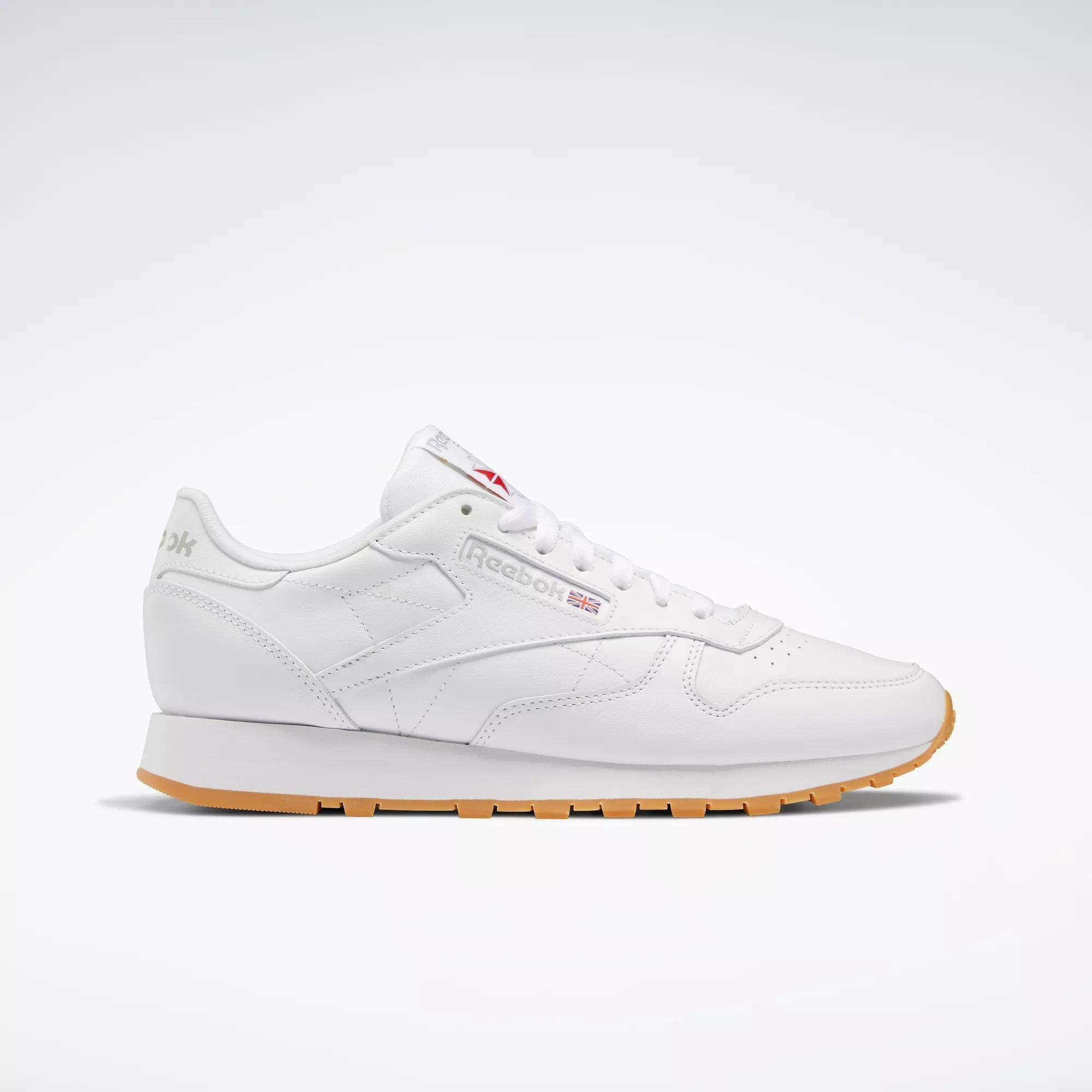
The Puma Future Rider is a direct descendant of the original 1980 Puma Fast Rider. At the time of its inception, the Fast Rider was revolutionary, introducing the concept of a multi-studded, shock-absorbing outsole designed to tackle both unpredictable trails and harsh asphalt. Today, the Future Rider retains this aggressive, deconstructed aesthetic but updates the materials for modern consumers. In stark contrast, the Reebok Classic Leather, introduced in 1983, took a decidedly more minimalist and premium approach. By utilizing garment leather for the entire upper, Reebok created a shoe that felt luxurious out of the box and appealed heavily to the fashion-conscious fitness boom of the decade.
Material Composition and Upper Breathability
The choice of materials in these retro runners drastically influences both their visual identity and their functional comfort during prolonged casual wear. The engineering approaches taken by Puma and Reebok represent two completely different philosophies regarding temperature regulation and foot conformity.
- Puma Future Rider’s Hybrid Upper: Puma utilizes a complex mixture of lightweight nylon, breathable mesh, and strategic suede overlays. This multi-material approach ensures that the shoe remains highly breathable, making it an excellent choice for warmer climates. The suede panels are strategically placed at high-wear areas like the toe box and heel counter to provide structural integrity without adding excessive weight.
- Reebok’s Full Leather Enclosure: The Classic Leather stays true to its name, featuring a monochromatic, full-grain leather upper. While this provides exceptional durability, water resistance, and a sleek, uniform aesthetic that pairs easily with formal or casual attire, it sacrifices breathability. The leather requires a brief break-in period to mold to the wearer’s foot, after which it offers a customized, glove-like fit.
Assessing the Comfort and Lifestyle Appeal of Classic Silhouettes
When evaluating retro running shoes for modern use, the definition of “comfort” shifts away from energy return and impact protection during a 10K run, focusing instead on all-day standing support, arch contouring, and walking ergonomics. Both the Puma Future Rider and the Reebok Classic Leather rely on traditional EVA (Ethylene-Vinyl Acetate) foam, but their distinct outsole geometries create entirely different underfoot experiences.
The Puma Future Rider utilizes its signature “Federbein” outsole geometry. This design features inverted V-shaped rubber studs that compress upon impact, acting as independent shock absorbers. Paired with a slightly softer injection-molded EVA midsole, the Future Rider offers a surprisingly bouncy and responsive feel for a retro shoe. The Reebok Classic Leather, conversely, employs a denser, dual-density EVA midsole paired with a flat, high-abrasion rubber outsole. This creates a firmer, more planted ride that excels in providing lateral stability and consistent arch support over long hours of standing.
Styling Versatility and Cultural Impact
Beyond their physical construction, the cultural cachet of these sneakers dictates their place in a modern wardrobe. The aesthetic choices made in the 80s continue to influence how these shoes are styled today.
The Puma Future Rider is inherently loud and dynamic. Its deconstructed look, exposed stitching, and penchant for vibrant, color-blocked colorways make it a statement piece. It pairs exceptionally well with athleisure, tapered joggers, and vintage streetwear. The Reebok Classic Leather is the antithesis of loud. Its monochromatic nature—most famously in pristine all-white or all-black—grants it unparalleled versatility. It is a chameleon that can seamlessly transition from gym shorts to tailored chinos, embodying a timeless, understated elegance that has kept it relevant in fashion circles for over forty years.
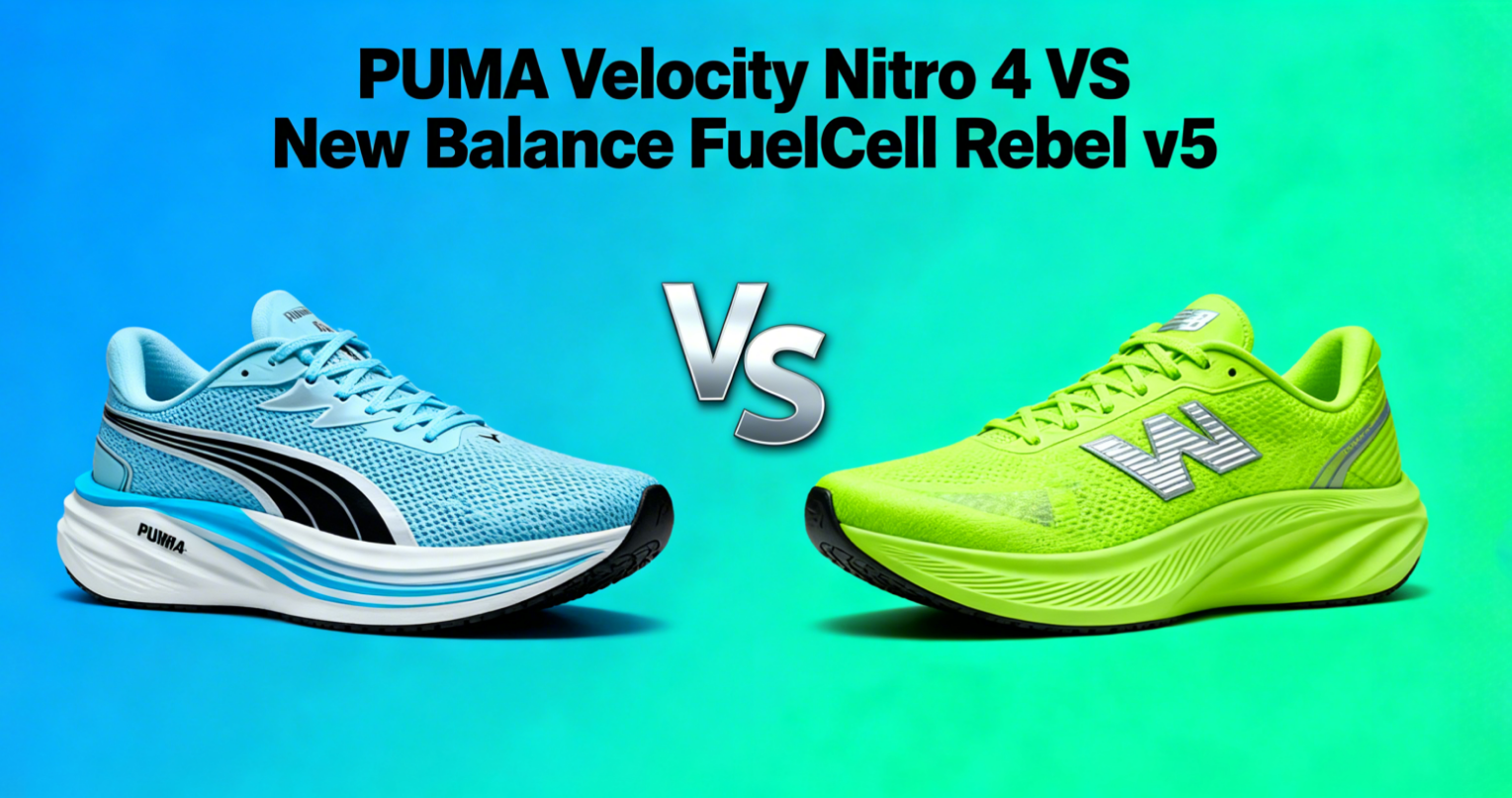
Daily Training Powerhouses: Puma Velocity Nitro 4 vs. New Balance FuelCell Rebel v5
Stepping out of the lifestyle category and onto the modern pavement, the daily trainer is arguably the most important shoe in a runner’s arsenal. This category demands a near-impossible combination of traits: it must be cushioned enough for long recovery runs, responsive enough for tempo workouts, and durable enough to withstand hundreds of miles of abrasive asphalt. In this highly competitive arena, the Puma Velocity Nitro 4 and the New Balance FuelCell Rebel v5 emerge as two of the most compelling options, albeit with entirely different engineering philosophies.
The Puma Velocity Nitro series has built a reputation as the quintessential reliable workhorse. Now in its fourth iteration, it continues to refine its dual-density midsole approach, prioritizing consistency, grip, and longevity. On the other side of the spectrum, the New Balance FuelCell Rebel v5 represents the modern trend of injecting race-day technology into daily trainers. By utilizing advanced supercritical foams in a lightweight package, the Rebel v5 prioritizes a fun, bouncy, and exhilarating ride, challenging the traditional notion of what a daily mileage shoe should feel like.
Comparative Analysis of Midsole Technologies
The heart of any modern running shoe is its midsole foam. The chemical composition and structural design of the foam dictate the shoe’s shock absorption, energy return, and lifespan. Here is how these two giants compare:
| Feature | Puma Velocity Nitro 4 | New Balance FuelCell Rebel v5 |
|---|---|---|
| Foam Technology | Dual-Layer: Nitro Foam (Nitrogen-infused) top core + firm PROFOAMLITE EVA base. | Single-Layer: FuelCell (PEBA/EVA blend) supercritical foam. |
| Ride Characteristics | Balanced, stable, moderately responsive, highly protective. | Extremely soft, highly bouncy, energetic, flexible. |
| Weight Profile | Moderate (built for durability and stability). | Ultra-lightweight (built for speed and agility). |
| Best Use Case | Easy miles, long runs, daily mileage, wet conditions. | Tempo runs, intervals, light daily training. |
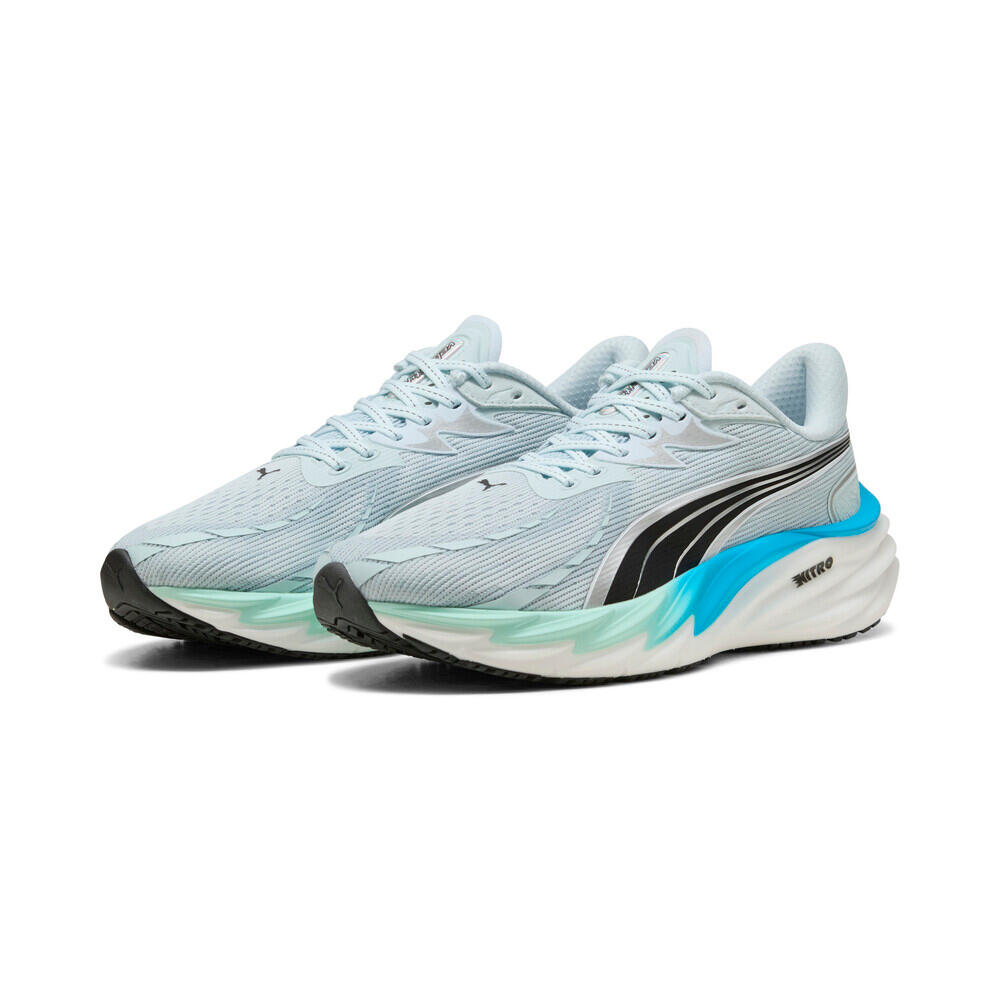
Deep Dive into the Puma Velocity Nitro 4 Performance Metrics
The Puma Velocity Nitro 4 is a masterclass in pragmatic running shoe design. Instead of chasing the absolute lowest weight or the highest stack height, Puma’s engineers focused on creating a shoe that performs consistently across a massive variety of paces and weather conditions. The secret to this versatility lies in its sophisticated dual-density midsole construction. The top layer, situated closest to the foot, consists of Puma’s proprietary Nitro foam—a nitrogen-infused compound that is remarkably soft and springy. However, to prevent the shoe from feeling overly mushy or unstable, this soft core is cradled by a firmer bottom layer of PROFOAMLITE EVA.
This dual-layer system ensures that the runner experiences the plush comfort of supercritical foam upon initial impact, followed immediately by the structural support and guided transition provided by the firmer EVA base. Furthermore, the upper of the Velocity Nitro 4 has been meticulously engineered using a structured engineered mesh. It incorporates Puma’s PWRTAPE technology, which provides targeted reinforcement across the midfoot, locking the foot down securely during tight cornering or uneven terrain.
The Unrivaled Power of PUMAGRIP
If there is one specific component that elevates the Velocity Nitro 4 above almost all of its competitors, it is the outsole. Puma has equipped this shoe with its legendary PUMAGRIP rubber compound. In the running community, PUMAGRIP is widely regarded as the gold standard for traction. Whether you are navigating rain-slicked asphalt, light gravel trails, or painted road lines, the outsole bites into the surface with astonishing reliability. This exceptional grip not only enhances safety in wet conditions but also improves running efficiency, as no energy is lost to micro-slips during the toe-off phase. Combined with a generous thickness of rubber, the Velocity Nitro 4 routinely outlasts competitors, easily surviving upwards of 400 to 500 miles of hard use.
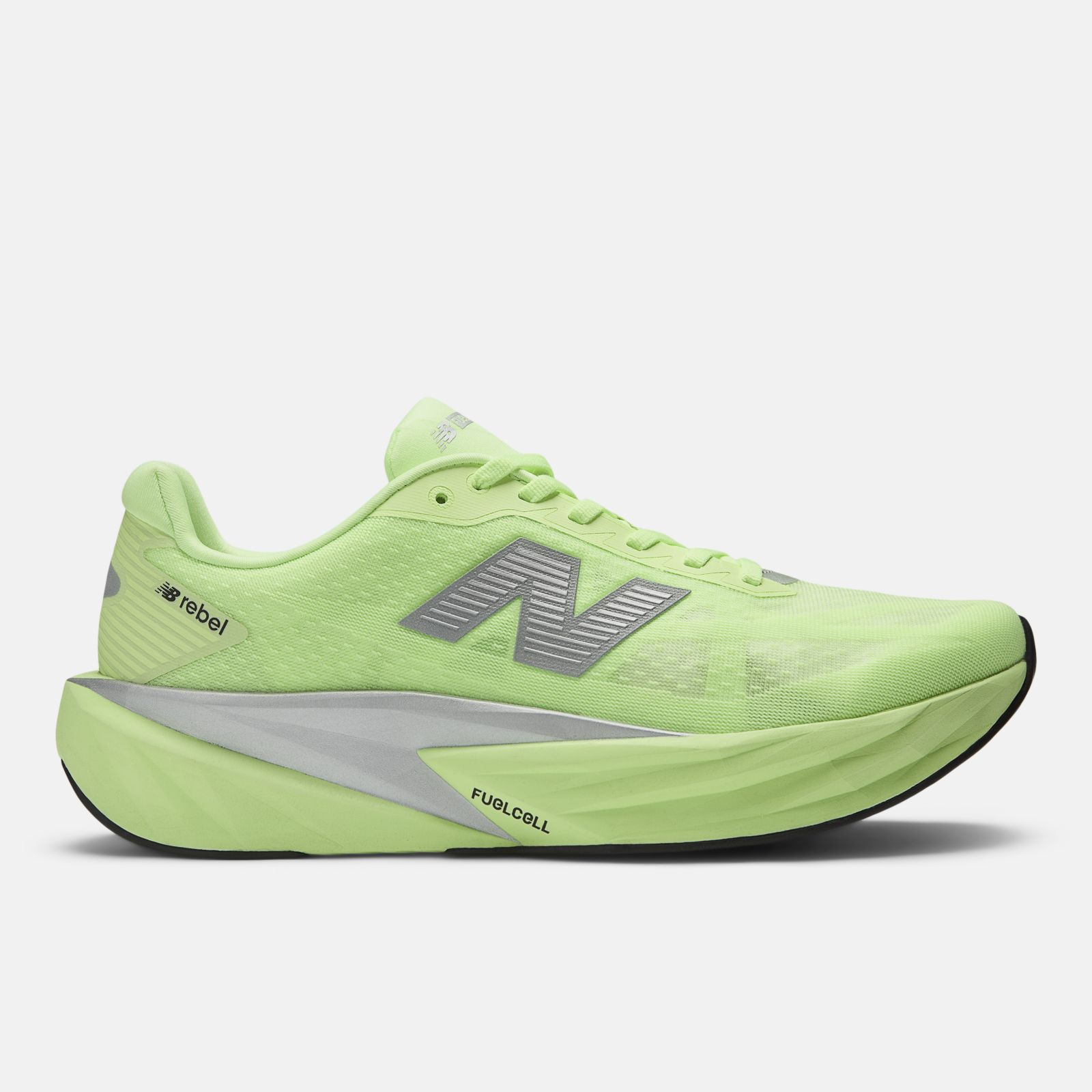
Evaluating the New Balance FuelCell Rebel v5 as a Competitor
Contrasting the workhorse nature of the Puma, the New Balance FuelCell Rebel v5 is designed for runners who want their daily miles to feel fast, effortless, and fun. New Balance achieved this by utilizing a PEBA/EVA blended FuelCell foam. PEBA (Polyether Block Amide) is the same ultra-resilient material used in elite marathon racing shoes. By blending it with EVA, New Balance manages to keep the cost down and increase durability slightly, while still delivering a massive dose of energy return. The moment you step into the Rebel v5, the softness is immediately apparent; the foam compresses deeply under load and rebounds violently, propelling the runner forward.
To accommodate this incredibly soft foam, New Balance had to radically alter the shoe’s geometry. The Rebel v5 features a significantly widened base, particularly through the midfoot and forefoot. This wide platform acts as an outrigger, preventing the ankle from rolling inward or outward as the soft foam compresses. The upper is constructed from an impossibly thin, race-inspired FantomFit mesh, which contributes to the shoe’s featherlight weight. However, this pursuit of weight reduction comes with compromises.
Durability and Stability Trade-offs
While the Rebel v5 offers an intoxicatingly energetic ride, it lacks the rugged longevity of the Velocity Nitro 4. The outsole features minimal rubber coverage, leaving large sections of the soft FuelCell foam exposed to the abrasive road. Consequently, runners will notice faster wear and tear, particularly if they are heavy heel strikers. Additionally, while the wide base provides a degree of inherent stability, the sheer softness of the midsole means that runners with overpronation issues may find the Rebel v5 too unstructured for long, fatiguing runs. It is a spectacular shoe for up-tempo days, but it may require pairing with a more stable shoe for everyday volume.
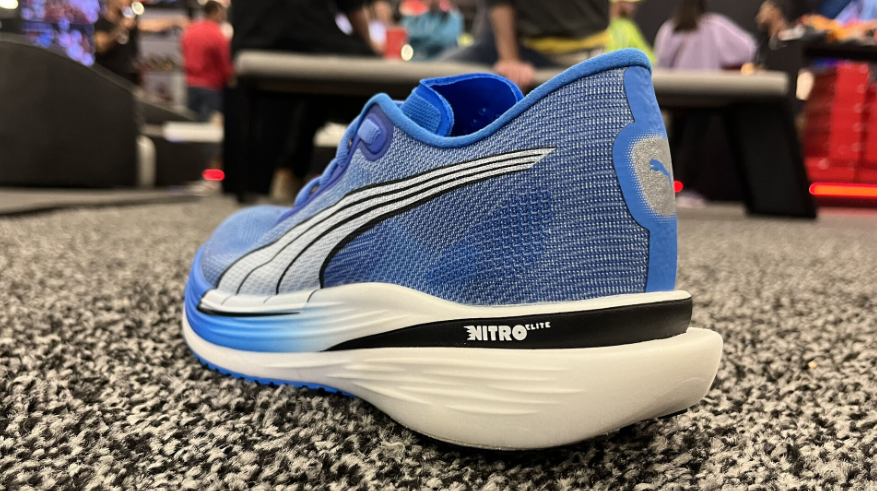
The Carbon Plate Revolution: Puma Deviate Nitro Elite 2 Analysis
At the absolute apex of the running shoe hierarchy sits the “Super Shoe”—a category defined by maximum stack heights of ultra-responsive foam paired with rigid carbon fiber plates. While brands like Nike and Adidas dominate the marketing headlines in this space, the Puma Deviate Nitro Elite 2 has quietly established itself as one of the most formidable, underrated, and accessible carbon-plated racers on the market. Engineered specifically for elite marathoners and serious amateurs chasing personal bests, this shoe represents the culmination of Puma’s advanced biomechanical research.
The magic of the Deviate Nitro Elite 2 lies in its precise synchronization of two core technologies: the Nitro Elite foam and the PWRPLATE. The midsole is constructed entirely of Nitro Elite, an aliphatic TPU and PEBA blend that is significantly lighter and more explosive than the standard Nitro foam found in their daily trainers. Embedded within this massive slab of foam is the PWRPLATE, a spoon-shaped carbon fiber lever. During the running gait cycle, the runner’s body weight compresses the highly resilient foam, while the rigid carbon plate stabilizes the compression and acts as a fulcrum. As the runner transitions to toe-off, the foam rebounds and the plate snaps back into its original shape, delivering a massive mechanical advantage that reduces the energetic cost of running.
Why the Deviate Nitro Elite 2 is a Hidden Gem
Despite lacking the overwhelming hype of its competitors, the Deviate Nitro Elite 2 offers several distinct advantages that make it a superior choice for many long-distance runners.
- Accommodating Fit and Comfort: Many carbon-plated racers suffer from incredibly narrow midfoots and harsh, unforgiving uppers that can cause blistering over 26.2 miles. The Deviate Nitro Elite 2 utilizes a mono-mesh upper that is exceptionally breathable but offers a slightly more generous, anatomical fit, reducing the risk of late-race foot trauma.
- Superior Outsole Traction: Just like its daily training sibling, this elite racer features a thin layer of PUMAGRIP rubber. Most super shoes use slick, minimalist outsoles to save weight, making them treacherous on wet race days. The Deviate Nitro Elite 2 allows runners to confidently aggressively corner in the rain without fear of slipping.
- Durability and Value: Super shoes are notoriously fragile, often losing their “pop” after just 100 miles. The specific PEBA blend used in the Nitro Elite foam, combined with the robust PUMAGRIP outsole, gives this shoe a significantly longer lifespan than average, making it a highly cost-effective investment for serious racers.
Frequently Asked Questions (FAQ)
- Are retro running shoes like the Puma Future Rider suitable for actual running?
- No. While they were originally designed for running in the 1980s, modern footwear technology has vastly surpassed them. Retro shoes utilize dense, outdated EVA foams and heavy upper materials that lack the impact protection, energy return, and breathability required for modern running. They should be strictly reserved for casual lifestyle wear, walking, and fashion purposes.
- How does Puma’s Nitro foam differ from standard EVA foam?
- Standard EVA (Ethylene-Vinyl Acetate) is a traditional, chemically blown foam that is relatively firm and tends to compress and flatten over time. Puma’s Nitro foam is created by infusing nitrogen gas into the raw foam material during the manufacturing process. This creates a supercritical foam that is significantly lighter, exponentially softer, and offers a much higher percentage of energy return (bounce) with every step.
- If the New Balance Rebel v5 is lighter and bouncier, why choose the Puma Velocity Nitro 4?
- The choice comes down to durability, stability, and intended use. The Puma Velocity Nitro 4 is built like a tank; its dual-density foam provides better structural support for tired legs, and its extensive PUMAGRIP outsole will last hundreds of miles longer. The Rebel v5 is incredibly fun and fast, but its ultra-soft foam can cause foot fatigue on very long runs, and its exposed outsole will degrade much faster. The Velocity is a daily workhorse, while the Rebel is a specialized tempo tool.
- Do I need a carbon-plated shoe like the Deviate Nitro Elite 2 if I am not a professional runner?
- You do not *need* one, but you can certainly benefit from one if you are actively racing and trying to beat your personal best times. Carbon-plated shoes improve running economy by 2-4%, meaning you expend less energy to maintain a given pace. However, because they alter your natural biomechanics, they should be used sparingly for key speed workouts and race days, rather than for everyday easy jogging.