For runners who prioritize comfort, Adidas’ Ultraboost series is practically a symbol of an era. With its “popcorn-like” midsole that feels like “clouds spreading out” when you step on it, it clearly set the benchmark for top-tier cushioning. Many jogging enthusiasts feel a sense of satisfaction when they mention UB, like mentioning their cherished dream – a long-awaited reunion that still stirs their hearts.
But the competition in the running shoe world never stops. Adidas remains firmly in control, but on the other hand, American hardcore brands are clearly unwilling to be mere followers. Under Armour, a brand that once rose to fame with its performance gear, has been going all out in running shoe technology in recent years—especially its Under Armour Pro running line . They are trying to raise the bar for modern running shoes with HOVR technology, compressed energy grids, and a “zero-gravity feel.”
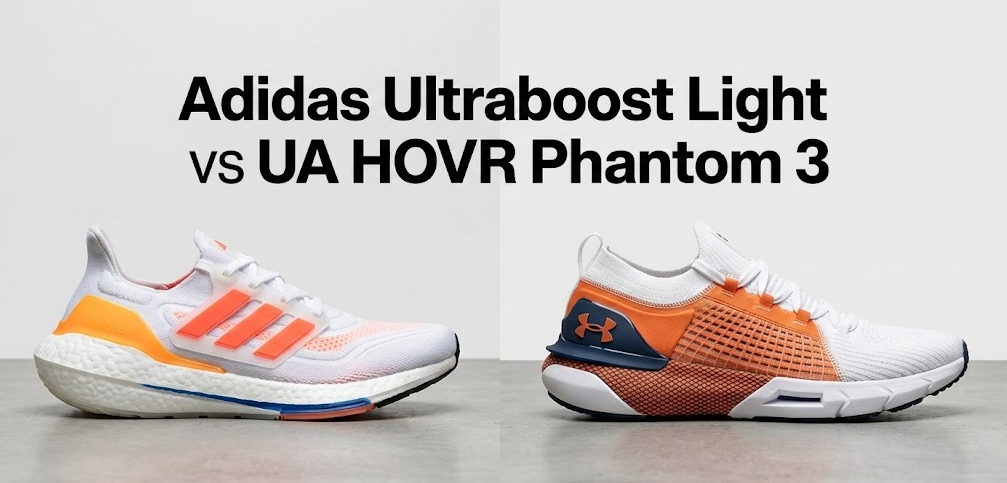
One is a veteran cushioning powerhouse nurtured by German engineering, the other a smart powerhouse built with American technology.
Will the Adidas Ultraboost Light continue its reign,
or will the UA HOVR Phantom 3 make a formidable entrance?
The following in-depth comparative review should give you a reliable answer.
I. Midsole Technology: Boost vs HOVR, a head-on clash between softness and toughness
When it comes to running shoes, the midsole is always the soul.
Adidas Ultraboost Light: A lighter, more comfortable “walking on clouds” feel.
Everyone knows the old Ultraboost’s biggest flaw—its weight.
But Ultraboost Light has finally solved that problem.
It uses the all-new Light Boost (officially claimed to be 30% lighter than traditional Boost).
The feet still feel soft and supple, but they no longer feel “dragy”.
The compression and rebound process of the foam is more crisp, preventing it from collapsing upon landing.
More importantly, it’s very friendly to heavier runners . From knee pressure to landing cushioning, the protection provided by this shoe remains the best in the industry.
UA HOVR Phantom 3: A resilient “zero-gravity propulsion experience”
HOVR takes a completely different approach. It encapsulates the foam material within an energy grid, limiting the foam’s uncontrolled deformation and making the rebound more concentrated and direct.
The feeling when wearing it is:
It’s not soft, but incredibly resilient.
It won’t make you sink in like Boost.
Each step felt like being gently pushed.
After running 6 or 8 kilometers, this “support + propulsion” feeling will become increasingly apparent.
You’ll realize:
Oh, these shoes are designed for endurance runners.
II. Upper Comfort: Primeknit+’s snug fit vs. IntelliKnit’s stability
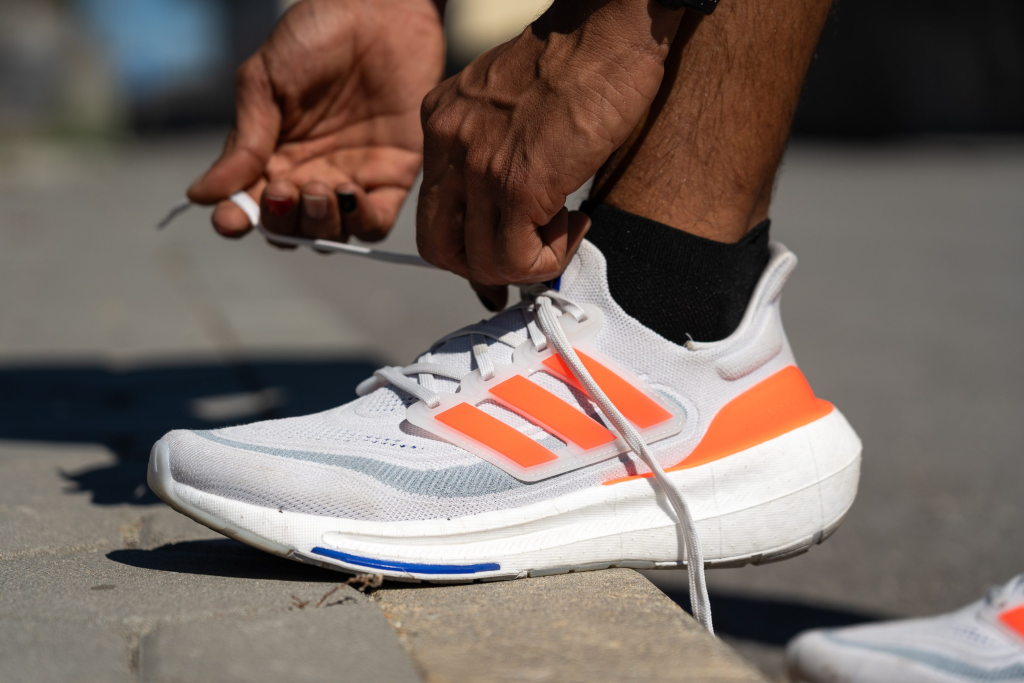
Adidas: Sock-like coverage, once you put them on, you won’t want to take them off.
Primeknit+ has a very comfortable stretch, like a second skin.
breathable
soft
Extremely strong containment
But its problems are also very real:
People with high insteps may be pressed down
Putting on and taking off requires some patience
Wearing it for a long time may cause a feeling of tightness.
It’s almost the typical “comfortable, but not suitable for all foot types” kind.
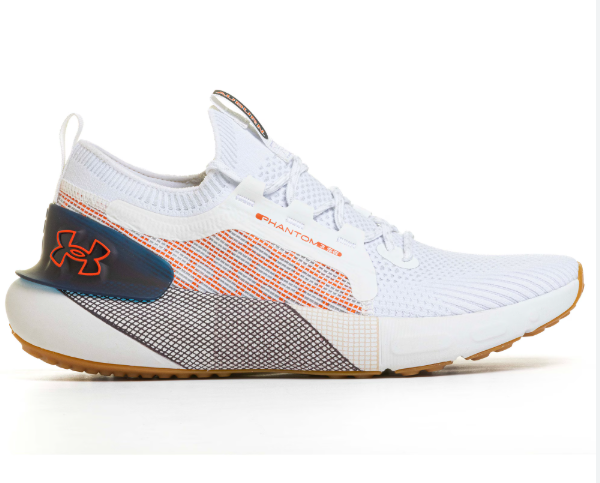
UA: Offers clear structural support, making it more suitable for wide feet or high insteps.
The Phantom 3’s IntelliKnit is not just woven; it also features a molded structure in the midfoot area.
More obvious support
The stretch is just right, and it doesn’t constrict the feet.
The TPU heel counter is incredibly stable.
Unstable landing while running? Ankles prone to wobbling?
The Phantom 3 will keep you securely in place.
III. Outsole Performance: Continental rubber remains “unbeatable”.
There’s basically no suspense here.
Adidas Ultraboost Light:
Continue using Continental™ rubber.
Whether it is:
dry land
wetlands
asphalt road
floor tiles
Its grip is ridiculously strong.
If you like running after the rain, it will give you a great sense of security.
UA Phantom 3:
UA’s abrasion resistance remains its strength, but its extreme grip on wet and slippery surfaces still can’t beat Continental rubber.
IV. UA’s Exclusive Feature: The Smart Chip is Almost a “Disruptive Advantage”
This is also what makes the Phantom 3 most appealing to tech enthusiasts.
Under Armour has embedded a Bluetooth chip in the shoe:
No need to bring your phone
Automatically records stride length, cadence, distance, and landing angle.
After your run, connect to MapMyRun → it will provide you with running form analysis and suggestions.
for example:
“Your stride is too long, which can easily cause fatigue in your calves in the second half.”
For runners, this is practically equivalent to having a personal trainer who doesn’t charge a fee.
Adidas has not yet equipped its mass-produced running shoes with similar features, so UA is a generation ahead in terms of “smart technology”.
V. Which pair should you buy? (Conclusion after a 50 km test)
To say that the two pairs of shoes are “distinctive” is an understatement.
Choose Adidas Ultraboost Light if you:
Heavy weight (80kg+)
Want the ultimate cushioning protection
Mainly running 5–10 km
I walk a lot and use them as commuting shoes.
Running in the rain, preferring strong grip
These shoes are “the epitome of comfort and safety”.
Choose UA HOVR Phantom 3 if you:
I don’t like overly soft foot feel; I prefer a more resilient and bouncy feel.
High instep and wide foot (UB is too oppressive for you)
Want stability, want to be locked in
I enjoy analyzing running data.
Or maybe you’re too lazy to bring your phone while running, but still want to record data.
It is the epitome of cutting-edge technology in the running world.
In conclusion: There is no absolute king, only what suits your feet best.
Ultraboost Light is the reliable elder brother, soft, protective, and comfortable;
HOVR Phantom 3 is the rugged new tech darling, stable, resilient, and intelligent.
The best running shoes are not the most expensive, nor the most powerful, but:
Those are the shoes you put on, the ones you can’t help but want to run out of.
If you are still hesitant, my sincere advice is:
Go to the store and try them on.
You’ll immediately know whether you belong to the “walking on clouds” type or the “zero gravity” type.