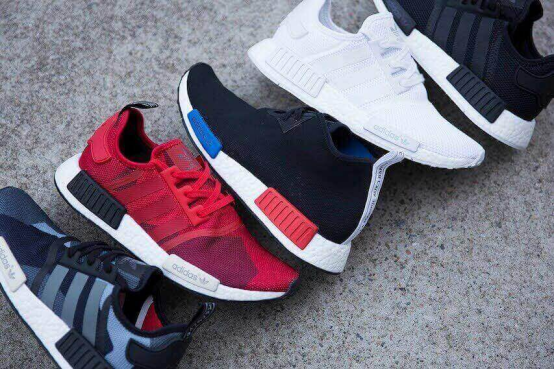
In December 2015, adidas Originals released a brand new shoe model, the NMD R1. This shoe combines the design elements of three classic running shoes in the brand’s history (Micropacer, Rising Star and Boston Super), and for the first time combines the Boost midsole technology with the Primeknit upper to create a new silhouette that is both retro and modern. It is not a replica, but a reinterpretation.
From being hard to come by to market saturation, and then to being a classic for everyday wear today, the journey of NMD has witnessed the true rhythm of changing trends.
Chapter 1: Rise (2015–2016) – A symbol of trendy culture
colorway
features a black upper with blue and red EVA blocks, making it highly recognizable. The upper is made of a sock-like Primeknit upper, which is comfortable while retaining the silhouette of the classic 1980s shoe. The Boost midsole gives it lightness and cushioning properties, making it not only street-style but also practical.
The origin of the name NMD:
Nic Galway, global creative director of adidas Originals, once said that “NMD” was originally an internal code name during the product development process, but with the evolution of design concepts, it gradually represented the “Nomad” lifestyle and symbolized the constantly moving people in the city.
The limited-edition strategy drives popularity
. The NMD R1 was quickly sold out in the global market when it was first released, triggering a rush to buy in many regions in North America, Europe and Asia. Some city-limited color schemes, such as the city-limited models in the “Key City” plan, were sold at high prices due to the scarcity of supply.
The collaboration inspires cultural identity
. The Nice Kicks collaboration uses a unique tie-dye upper, which has become one of the most iconic colors in NMD history. In 2016, Pharrell Williams launched the “NMD Human Race” series, expressing social issues through text embroidery, which has aroused cultural resonance. The prices of some colors have been rising in the secondary market, becoming collectibles.
Chapter 2: Stall (2017–2018) — Market Excess and Design Bottlenecks
The new version design was not well received.
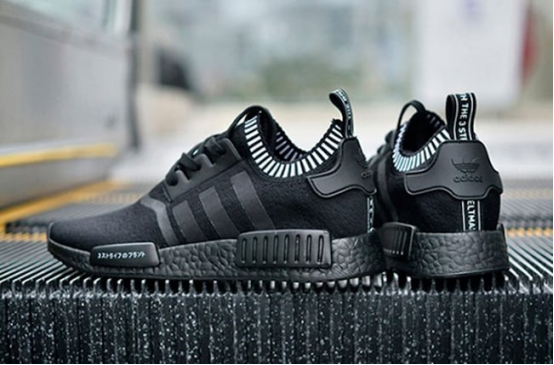
NMD XR1 added a support cage design, which improved stability but lost the original simple and streamlined beauty. Although NMD R2 retained the Boost midsole, its thickened upper and thicker EVA parts made many original fans dissatisfied. Although the sock-like laceless design of NMD CS2 is avant-garde, it is considered by some consumers to be “only good-looking” because of its narrow last and insufficient wrapping.
Overexploitation of color schemes and versions
Between 2016 and 2018, adidas launched hundreds of color schemes and multiple sub-models, causing the rarity and uniqueness of the NMD series to decline rapidly. The once popular model quickly became “everywhere”, and the attention of trendy consumers also dropped significantly.
In comparison, Ultra Boost in the same period maintained its market popularity for a longer time due to its positioning as a performance running shoe and its limited joint-brand strategy.
Chapter 3: Steady Return (2019 to Present) – From Trend to Daily Life
Simplifying the design and lowering the price,
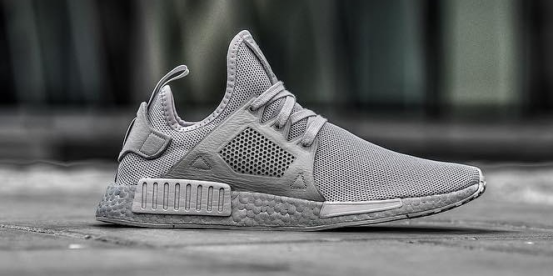
adidas launched the NMD R1 V2 in 2019. While continuing the classic silhouette, it made slight improvements to the structure, made the material more breathable, and made the pricing strategy more affordable. The brand gradually transformed the NMD into a lifestyle shoe that is mainly worn daily.
No longer emphasizing hype, becoming a versatile shoe model,
NMD is no longer dominated by a limited edition strategy, but as a regular option in the adidas Originals series, it is gradually fading out of the hype shoe market, but still maintains a place in street culture with its comfort and appearance advantages.
The adidas NMD story reminds us:
Innovative designs can indeed lead the trend, but only long-term user experience can make a shoe become a classic;
Hype and co-branding can quickly increase popularity, but a stable product strategy is the way to last;
The rise and fall of every pair of trendy shoes is the result of the joint shaping of the culture of the times and brand strategy.
If you still have a pair of NMD in your shoe cabinet, it is still worth wearing on the streets. Even if it is no longer popular, its influence has already become a part of sneaker culture.